
Welcome to Starling, a platform for AI-assisted teaching workflows.
Starling grades the whole class set against your rubric, or generates one for you. AI - suggested grades are used to speed up your grading process but you always get the final say with our human-in-the-loop system.
A full suite for running your grading.
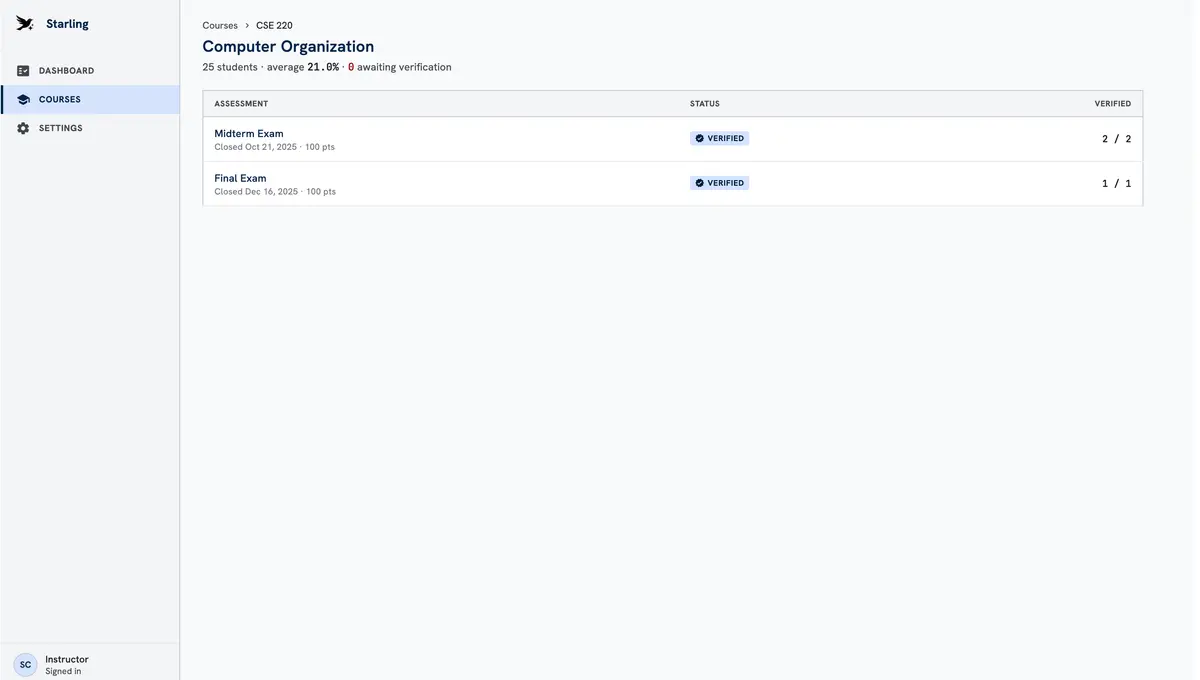
Courses, submissions, rubrics and review in one place. Starling reads the argument the student actually made, and shows you where every score came from.
How it works
Rubric first, then grading, then you.
- Step 01
Contextualization
Our AI begins by reading student submissions and creating temporary contextualization for our grading agents so that a generated rubric is tailored specifically to your course and assignment.
- Step 02
Rubric creation
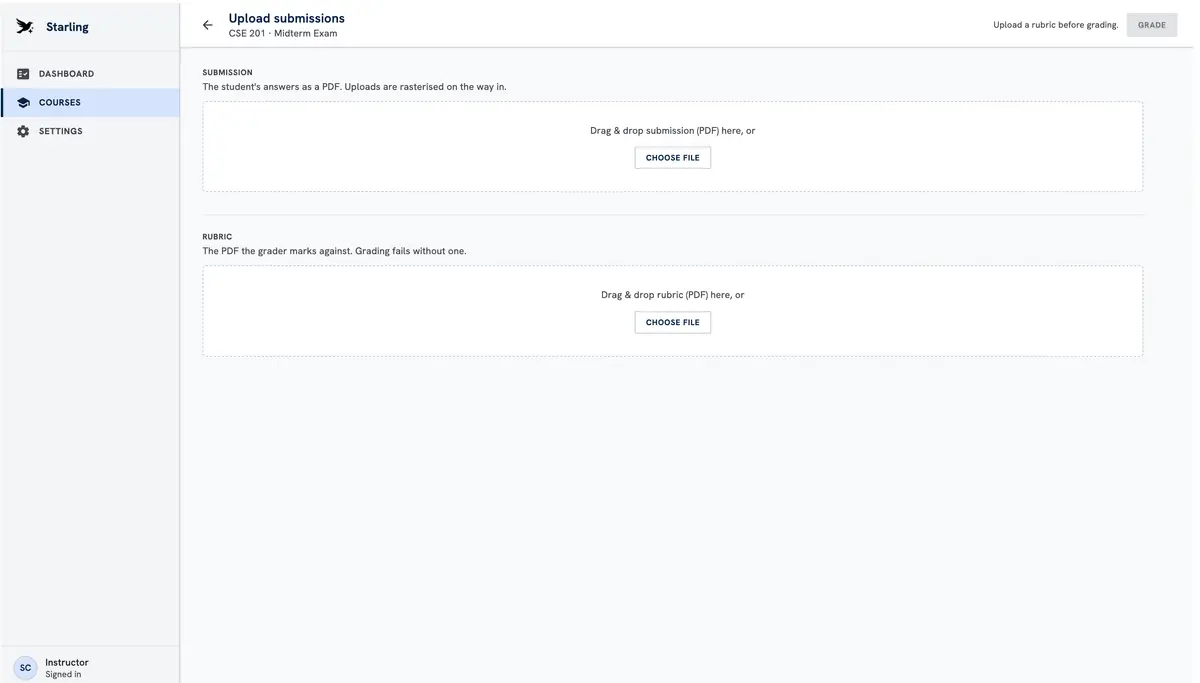
Starling guides you through building a foolproof rubric. It reads the assessment, asks what earns full credit and what earns partial on each question, and turns your answers into criteria and point values that leave nothing ambiguous. Already have a rubric? Upload it and grading starts there.
- Step 03
Grading
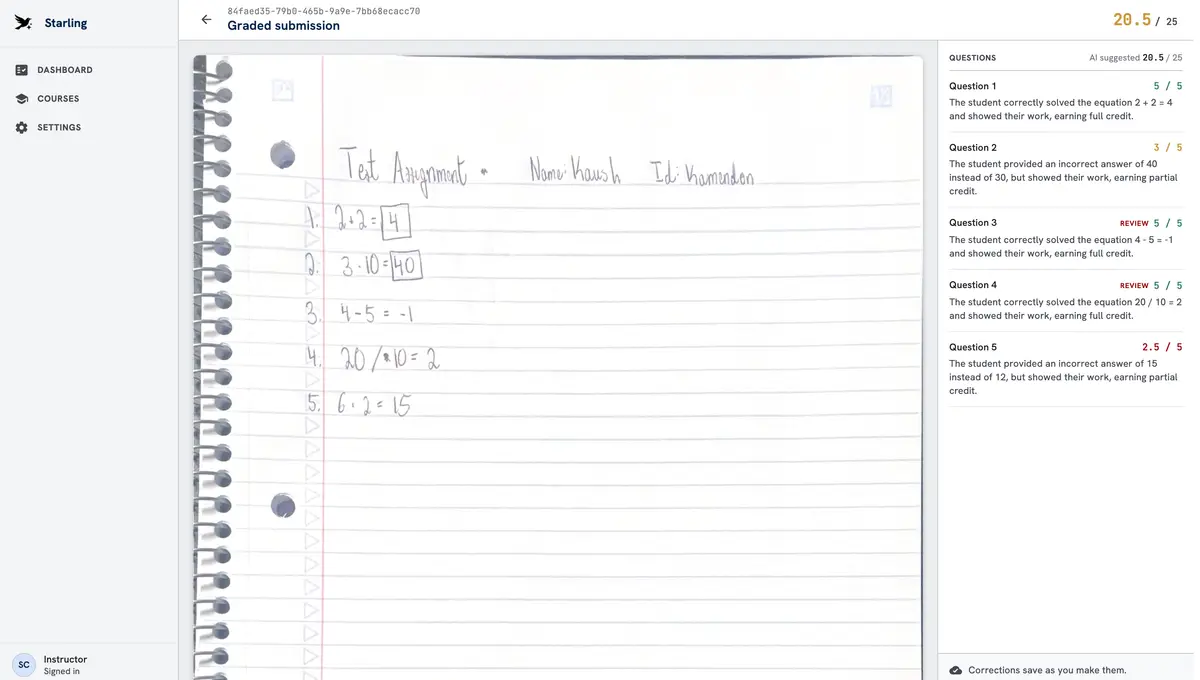
A state of the art AI pipeline grades strictly against that rubric, question by question, with multiple rounds of review on every submission. Each pass checks the score against the criterion it came from, so a mark is only kept once it has held up more than once.
- Step 04
Human in the loop
Starling's feedback and its justification sit next to each individual problem. Every score is editable, every question takes your own comment, and the change carries through the rest of the set. Nothing is published until you verify it.
Student work stays the student's.
Privacy and security are the conditions of the product, not a setting inside it.
A FERPA certified team
Everyone at Starling who can touch the system is FERPA certified, and the product is built to the standard we are held to. Access is logged, scoped to your institution, and reviewed.
Submissions are never stored
Papers are processed and discarded. Once grades come back, the work is gone from our servers and we keep no archive of student writing.
Nothing trains a model
Submissions, rubrics, names, and grades are never used to train AI. Your students' work is used to grade your students' work, and for nothing else.
Bring your next class set.
Grade your first fifty papers free. No card, no pilot call, no integration work.
Start grading